
Ecuador’s Galapagos Islands Face Many Threats
Ecuador’s Galapagos Islands Face Many Threats
ガラパゴス諸島と聞くと、豊かな自然や珍しい生き物を思い浮かべますよね。そんな場所がいま、海と陸の両方からさまざまな影響を受け始めています。気候の変化や外来種の増加など、生き物たちの暮らしを揺らす要因が重なっているのです。遠い地域の話に思えるかもしれませんが、地球全体の環境を考えるうえでは私たちの生活ともつながっています。こうした問題に向き合うために、私たちが日常でできる行動にはどんなものがあるでしょうか?
1.Article
Directions: Read the following article aloud.
The Galapagos, a group of islands in the Eastern Pacific Ocean, are coming under increased pressure.
Observers say climate change and invasive species threaten wildlife on and around the islands, which are part of the South American country of Ecuador.
Warming ocean waters affect the food sources of many of the sea animals around the Galapagos.
Marine iguanas are one of many species that are unique to the Galapagos. The reptiles have a harder time finding the food they prefer - red and green algae. A recent Associated Press (AP) report said sea turtles struggle to nest in warmer temperatures. Raising young gets harder as water warms and fewer nutrients are available.
“We have something of everything here – that’s why people say the Galapagos is so diverse – but we have a small number of each thing,” said Natasha Cabezas, a naturalist guide.
The group of islands is where major ocean currents meet — cool water from the south, warm water from the north, and a cold current from the west. In addition to those, there is El Niño, the periodic and natural Pacific Ocean warming that affects weather worldwide.
While temperatures depend on the season and other natural climate events, scientists say ocean temperatures have been rising. They blame climate change caused by human activities.
Some scientists say the ocean has reached its warmest level since at least the 1800s within the last 10 years. The U.S. space agency NASA says 2023 was the ocean’s warmest year on record.
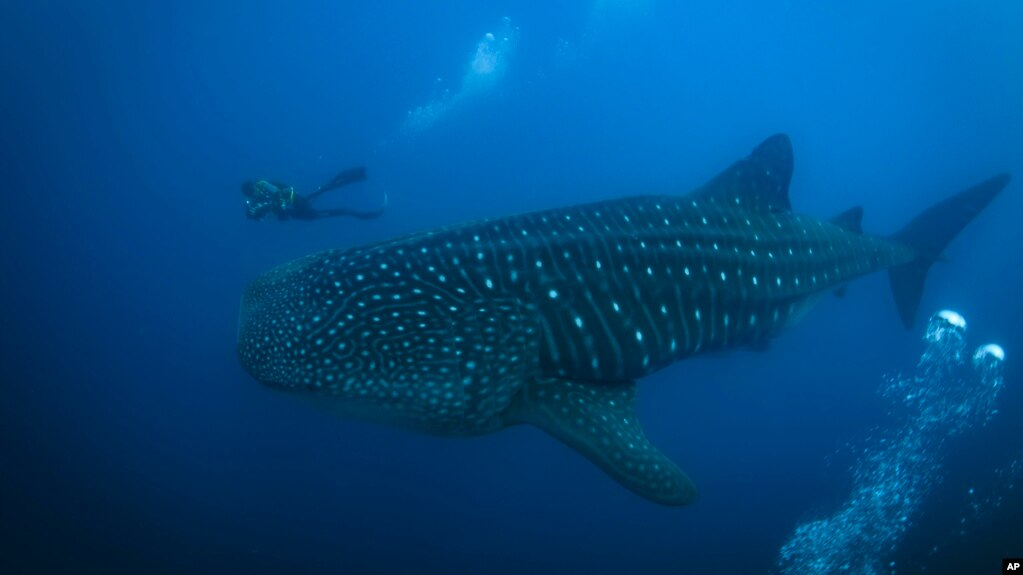
In the Southern Hemisphere, June is the first month of winter. One of the ocean currents, the Cromwell current, brings sea creatures like whale sharks, hammerheads, and sunfish to the surface. It also provides nutrients for penguins, marine iguanas and sea lions in search of food.
Scientists are studying how the past year’s El Niño affected those creatures.
El Niño can bring food shortages for some species like marine iguanas and sea turtles. Scientists observing the species have noted a decrease in their populations during El Niño events.
Marine iguanas were “one of the most affected species from El Niño last year and right now they are still recovering,” said Galapagos Conservancy Director Jorge Carrión.
Invasive species
As rising ocean temperatures threaten sea life, on land there is a different problem. Animals — cats, dogs, pigs, goats and cattle, none of them native — are threatening the unique species of the islands.
After the COVID-19 pandemic, many people left dogs and cats they had been taking care of, Cabezas said.
“If you don’t take care of them, they become a problem and now it’s a shame to see dogs everywhere. We have a big problem right now I don’t know what we’re going to do,” she said.
The non-native animals are a special threat to the giant tortoises of the Galapagos. The tortoises almost disappeared in the 1800s because of hunting. Officials have tried to protect them from humans. It has been illegal to kill a giant tortoise since 1933.
“In one night, a feral pig can destroy all nesting sites in an area,” Carrión said. Park rangers try to visit areas with nesting sites once a day and kill pigs when they find them. But the pigs are difficult to find, Carrion said.
Feral cats feed on young marine iguanas, and both pigs and cats compete for food with the tortoises.
Plastic is also a widespread problem in the world’s oceans. One recent study reported microplastics in the bellies of Galapagos penguins.
“There are no animals in the Galapagos that do not have microplastics in their food,” Carrión said.
Observers say climate change and invasive species threaten wildlife on and around the islands, which are part of the South American country of Ecuador.
Warming ocean waters affect the food sources of many of the sea animals around the Galapagos.
Marine iguanas are one of many species that are unique to the Galapagos. The reptiles have a harder time finding the food they prefer - red and green algae. A recent Associated Press (AP) report said sea turtles struggle to nest in warmer temperatures. Raising young gets harder as water warms and fewer nutrients are available.
“We have something of everything here – that’s why people say the Galapagos is so diverse – but we have a small number of each thing,” said Natasha Cabezas, a naturalist guide.
A changing climate
The Galapagos Islands are famous for animals that were studied by Charles Darwin in the 1800s. He developed the theory that living things change over large amounts of time.The group of islands is where major ocean currents meet — cool water from the south, warm water from the north, and a cold current from the west. In addition to those, there is El Niño, the periodic and natural Pacific Ocean warming that affects weather worldwide.
While temperatures depend on the season and other natural climate events, scientists say ocean temperatures have been rising. They blame climate change caused by human activities.
Some scientists say the ocean has reached its warmest level since at least the 1800s within the last 10 years. The U.S. space agency NASA says 2023 was the ocean’s warmest year on record.
In the Southern Hemisphere, June is the first month of winter. One of the ocean currents, the Cromwell current, brings sea creatures like whale sharks, hammerheads, and sunfish to the surface. It also provides nutrients for penguins, marine iguanas and sea lions in search of food.
Scientists are studying how the past year’s El Niño affected those creatures.
El Niño can bring food shortages for some species like marine iguanas and sea turtles. Scientists observing the species have noted a decrease in their populations during El Niño events.
Marine iguanas were “one of the most affected species from El Niño last year and right now they are still recovering,” said Galapagos Conservancy Director Jorge Carrión.
Invasive species
As rising ocean temperatures threaten sea life, on land there is a different problem. Animals — cats, dogs, pigs, goats and cattle, none of them native — are threatening the unique species of the islands.
After the COVID-19 pandemic, many people left dogs and cats they had been taking care of, Cabezas said.
“If you don’t take care of them, they become a problem and now it’s a shame to see dogs everywhere. We have a big problem right now I don’t know what we’re going to do,” she said.
The non-native animals are a special threat to the giant tortoises of the Galapagos. The tortoises almost disappeared in the 1800s because of hunting. Officials have tried to protect them from humans. It has been illegal to kill a giant tortoise since 1933.
“In one night, a feral pig can destroy all nesting sites in an area,” Carrión said. Park rangers try to visit areas with nesting sites once a day and kill pigs when they find them. But the pigs are difficult to find, Carrion said.
Feral cats feed on young marine iguanas, and both pigs and cats compete for food with the tortoises.
Plastic is also a widespread problem in the world’s oceans. One recent study reported microplastics in the bellies of Galapagos penguins.
“There are no animals in the Galapagos that do not have microplastics in their food,” Carrión said.
Alie Skowronski reported on this story for the Associated Press. John Russell adapted it for VOA Learning English.
Source:Ecuador’s Galapagos Islands Face Many Threats
VOA
本教材は、the U.S. Agency for Global Mediaより許諾を得て、産経ヒューマンラーニング株式会社が編集しています。
テキストの無断転載・無断使用を固く禁じます 。