Rice Flour Gains Ground as Versatile Wheat-Free Alternative
Rice Flour Gains Ground as Versatile Wheat-Free Alternative
タルトやシュークリーム、うどんまで、「米粉」を使った食品の世界が少しずつ広がっています。日本では身近な素材ですが、最近はその使い方や魅力に海外からも関心が集まっているようです。食感や見た目、背景にある考え方によって、同じ食材でも印象は大きく変わりますね。こうした広がりは、私たちの食の選び方や、日本の食文化の伝え方にどんな影響を与えるのでしょうか。あなたは「米粉」の商品に、どんな可能性を感じますか。

1.Article
Directions: Read the following article aloud.
People with wheat allergies must avoid cakes and noodles made with wheat flour. Across Japan, rice-based alternatives are growing in popularity. Cakes and bread are especially popular, and rice-based udon is also being developed.
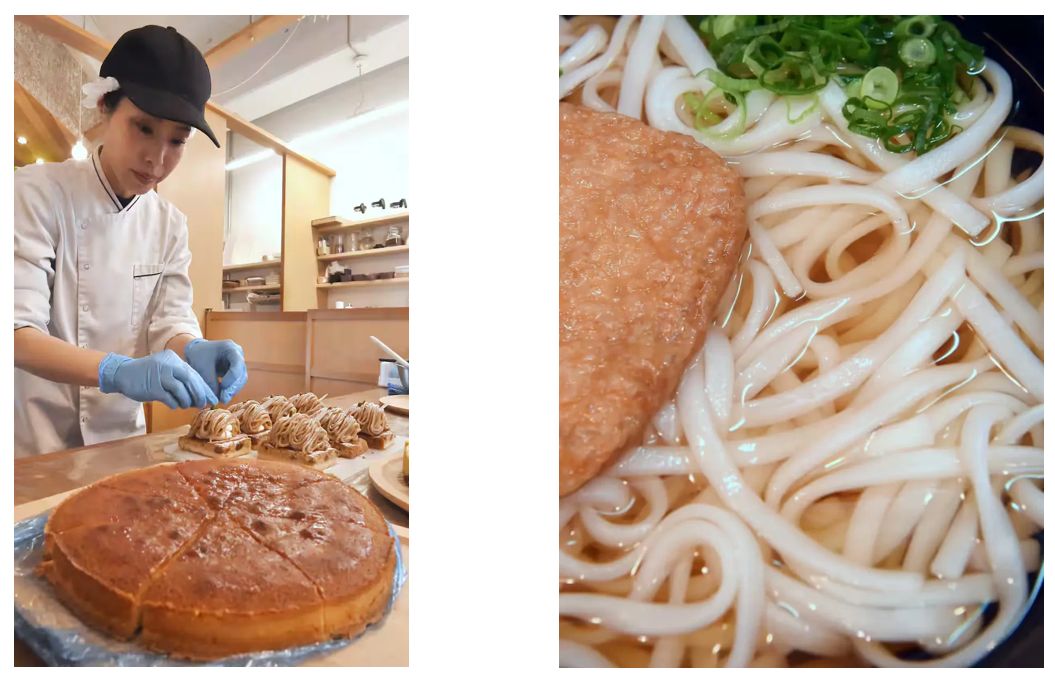
One café offering a wide range of rice-flour sweets is Comeconoco Gluten-Free Laboratory & Cafe in Osaka City. This popular pastry shop offers strawberry cream tarts, cream puffs, and other desserts, all made exclusively with rice flour.
The cream puffs have a light, crispy shell, and the tarts are rich and flavorful — so much so that customers would not realize they are made with rice flour unless told. The bread offers a similar experience: when toasted, it becomes soft and fluffy, with a taste that is slightly lighter than wheat-based bread.
The café was opened in February 2019 by Yukiko Nakajima, who previously worked at a Western-style confectionery. She says she wanted to "create sweets that incorporate Japanese elements." According to Nakajima, almost all Western-style pastries can be made using rice flour.
Birthday cakes make up a large share of the shop's demand, and many overseas customers also visit. This is partly because people of European and American ancestry are more likely than Japanese people to have hereditary conditions such as celiac disease. In such cases, gluten, a protein found in wheat, can cause symptoms like abdominal pain.
By highlighting its gluten-free offerings, the shop has gained the trust of travelers as well as staff from international pavilions during Expo 2025 Osaka, Kansai.
"I'm so happy that people feel that they can trust our shop," Nakajima says with a smile. As rice flour becomes more widely used, she adds that quality will matter more than ever and that the shop will continue to improve its products.
Rice-flour initiatives are also emerging in other forms. In the summer of 2023, the Osaka Eastern Agricultural Cooperative (JA Osaka Tobu), which oversees the cities of Daito and Shijonawate in eastern Osaka Prefecture, developed gluten-free rice-flour udon as a new regional specialty.
The project aims to promote locally produced rice, the area's main agricultural product, by expanding the use of rice flour. Made from the Hinohikari rice variety, the noodles have a firm texture and a refreshing, light taste that sets them apart from wheat-based udon. "The Kansai region has a strong udon culture," says Masuyuki Tonoya, the cooperative's president and the driving force behind the project.
Due to cost issues, the noodles are not yet sold commercially and are currently offered as samples. However, serving them at the Expo and donating them to local social welfare organizations has increased awareness.
Feedback has included comments such as, "People with allergies can eat this with peace of mind," and "My grandchild usually avoids udon but enjoyed it."
Looking ahead, Tonoya says, "We want to further popularize rice-flour udon and explore its use in pasta, somen noodles, and other products."
According to the agriculture ministry, consumption increased from about 5,000 tons in fiscal 2009 to roughly 25,000 tons in fiscal 2013. After remaining relatively stable through 2017, demand rose to about 31,000 tons in 2018 and approximately 36,000 tons in 2019 and 2020. By fiscal 2024, consumption reached around 56,000 tons, and it is estimated to have risen to about 62,000 tons in fiscal 2025.
Rice flour has long been used in traditional Japanese sweets such as kashiwa-mochi and dumplings. As rice consumption declined, private-sector initiatives promoted rice flour as a domestic alternative to imported wheat.
In recent years, gluten-free diets and efforts to address wheat allergies have attracted growing attention. Advances in product development by milling companies, increased consumer awareness, and the registration of rice varieties suitable for bread-making have all supported this trend. Reflecting these developments, the ministry's grains division says that demand for rice flour is showing steady growth.
One café offering a wide range of rice-flour sweets is Comeconoco Gluten-Free Laboratory & Cafe in Osaka City. This popular pastry shop offers strawberry cream tarts, cream puffs, and other desserts, all made exclusively with rice flour.
The cream puffs have a light, crispy shell, and the tarts are rich and flavorful — so much so that customers would not realize they are made with rice flour unless told. The bread offers a similar experience: when toasted, it becomes soft and fluffy, with a taste that is slightly lighter than wheat-based bread.
The café was opened in February 2019 by Yukiko Nakajima, who previously worked at a Western-style confectionery. She says she wanted to "create sweets that incorporate Japanese elements." According to Nakajima, almost all Western-style pastries can be made using rice flour.
Birthday cakes make up a large share of the shop's demand, and many overseas customers also visit. This is partly because people of European and American ancestry are more likely than Japanese people to have hereditary conditions such as celiac disease. In such cases, gluten, a protein found in wheat, can cause symptoms like abdominal pain.
By highlighting its gluten-free offerings, the shop has gained the trust of travelers as well as staff from international pavilions during Expo 2025 Osaka, Kansai.
"I'm so happy that people feel that they can trust our shop," Nakajima says with a smile. As rice flour becomes more widely used, she adds that quality will matter more than ever and that the shop will continue to improve its products.
Rice-flour initiatives are also emerging in other forms. In the summer of 2023, the Osaka Eastern Agricultural Cooperative (JA Osaka Tobu), which oversees the cities of Daito and Shijonawate in eastern Osaka Prefecture, developed gluten-free rice-flour udon as a new regional specialty.
The project aims to promote locally produced rice, the area's main agricultural product, by expanding the use of rice flour. Made from the Hinohikari rice variety, the noodles have a firm texture and a refreshing, light taste that sets them apart from wheat-based udon. "The Kansai region has a strong udon culture," says Masuyuki Tonoya, the cooperative's president and the driving force behind the project.
Due to cost issues, the noodles are not yet sold commercially and are currently offered as samples. However, serving them at the Expo and donating them to local social welfare organizations has increased awareness.
Feedback has included comments such as, "People with allergies can eat this with peace of mind," and "My grandchild usually avoids udon but enjoyed it."
Looking ahead, Tonoya says, "We want to further popularize rice-flour udon and explore its use in pasta, somen noodles, and other products."
According to the agriculture ministry, consumption increased from about 5,000 tons in fiscal 2009 to roughly 25,000 tons in fiscal 2013. After remaining relatively stable through 2017, demand rose to about 31,000 tons in 2018 and approximately 36,000 tons in 2019 and 2020. By fiscal 2024, consumption reached around 56,000 tons, and it is estimated to have risen to about 62,000 tons in fiscal 2025.
Rice flour has long been used in traditional Japanese sweets such as kashiwa-mochi and dumplings. As rice consumption declined, private-sector initiatives promoted rice flour as a domestic alternative to imported wheat.
In recent years, gluten-free diets and efforts to address wheat allergies have attracted growing attention. Advances in product development by milling companies, increased consumer awareness, and the registration of rice varieties suitable for bread-making have all supported this trend. Reflecting these developments, the ministry's grains division says that demand for rice flour is showing steady growth.
Source:Rice Flour Gains Ground as Versatile Wheat-Free Alternative
JAPAN Forward
本教材は、一般社団法人ジャパンフォワード推進機構、株式会社産経デジタルより許諾を得て、産経ヒューマンラーニング株式会社が編集しています。
テキストの無断転載・無断使用を固く禁じます 。