Is Snoring a Sign of Something More Serious?
Is Snoring a Sign of Something More Serious?
家族や友人から「いびきがすごいよ」と言われた経験はありますか。自分では気づきにくいものですが、一緒に暮らす人にとっては気になることの一つかもしれません。最近では、タレントの北斗晶さんが家族の体験を通して、いびきが病気のサインかもしれないと語りました。睡眠中の小さな変化は、体の不調を知らせるサインかもしれません。こうしたサインに、私たちはどう気づけばよいのでしょうか。あなたは睡眠と健康の関係をどう考えますか。
1.Article
Directions: Read the following article aloud.
Snoring is a problem that's easy to overlook. Even when it's severe enough to seriously disrupt sleep, many people leave it untreated. In 2025, the Japanese Society of Sleep Research took a step toward changing that, formally requesting that sleep disorders be recognized within the names of existing medical specialties, such as internal medicine, to make it easier for patients to find appropriate care. But what are the real health risks of leaving snoring unaddressed?
In January, a public awareness event on sleep apnea syndrome (SAS) was held in Tokyo. Former professional wrestler and TV personality Kensuke Sasaki, 59, spoke candidly about the moment a doctor first raised the possibility that he might have SAS.
"I never imagined that my breathing could stop for nearly two minutes while asleep — like I was drowning," Sasaki said. "I was shocked and knew right away that I couldn't ignore it."
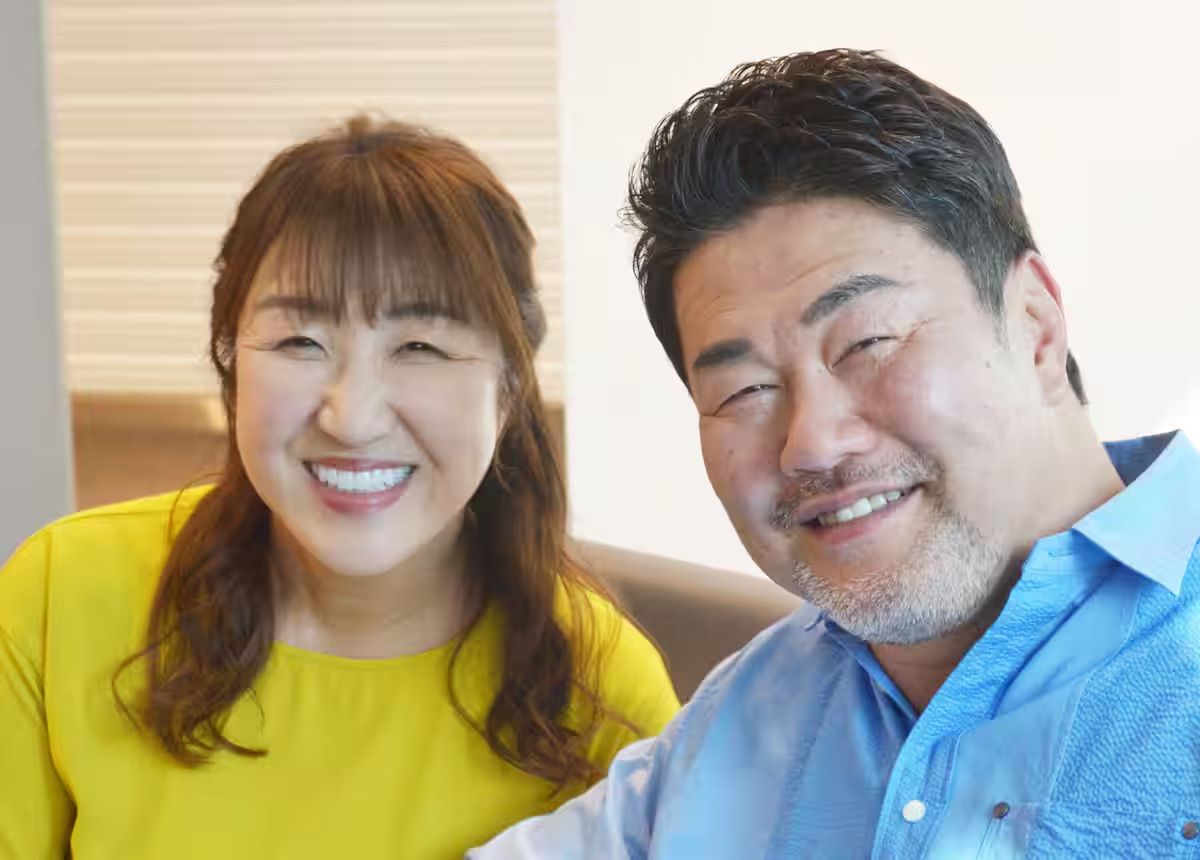
Sasaki had long been warned by his wife, former professional wrestler and TV personality Akira Hokuto about his loud snoring. Even other family members had noticed it during trips together. As a precaution, he underwent a sleep study to monitor his breathing overnight. At its worst, he had stopped breathing for nearly two minutes. "Even when I felt tired during the day, I just put it down to getting older," he said. "I finally understood that my body had been sending me signals all along."
Reflecting on the experience, Hokuto said, "It hit me that snoring could actually be a sign of something serious. I came to see that speaking up about a partner's snoring is, in its own way, an act of love."
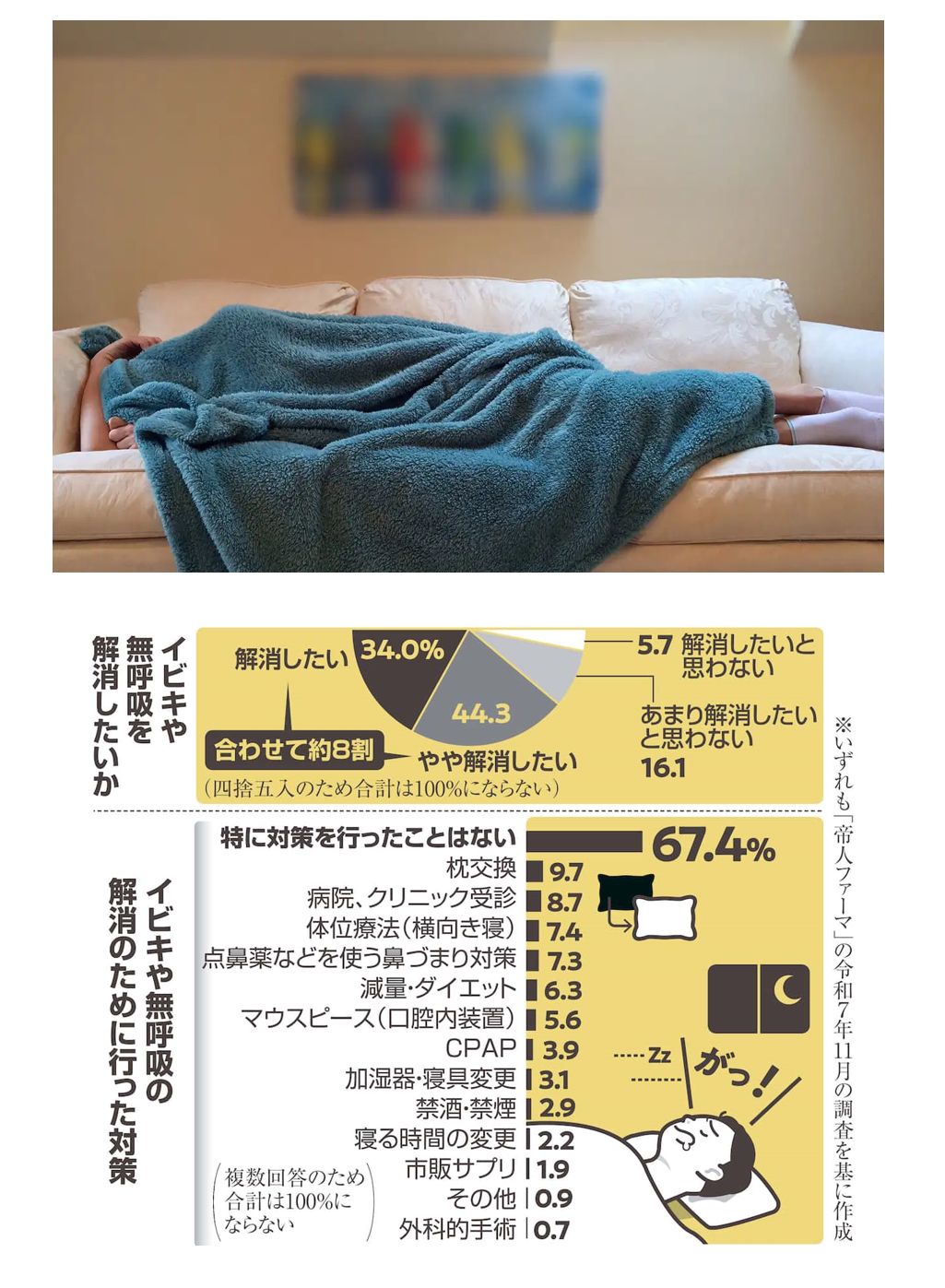
A November 2025 survey by Teijin Pharma, a Tokyo-based company that rents SAS treatment devices, polled 2,350 men and women across Japan who had been told by a family member that they snore.
About 80% said they wanted to address their snoring or apnea, yet roughly 70% had taken no concrete steps to do so, underscoring just how common it is for the problem to go unaddressed. A separate survey found that many people also hesitate to bring up a spouse's snoring in the first place.
Snoring occurs when the upper airway narrows during sleep. If the condition worsens and the airway becomes fully blocked, breathing stops altogether, which is what defines SAS. When this happens repeatedly over time, chronically low oxygen levels can cause the body to rouse itself, fragmenting sleep and leaving sufferers exhausted.
According to a 2023 survey by the health ministry, an estimated 475,000 people in Japan have been diagnosed with SAS. The true number, however, is thought to be far higher, with many cases going undetected.
"When sleep problems arise, it's important to see a medical professional promptly. But in Japan, it often takes a long time before someone actually gets examined," says Dr Naohisa Uchimura, president of Kurume University. He is also the chair of the Japanese Society of Sleep Research.
To help ensure that sleep problems, including snoring that may signal SAS, lead to proper medical care, the society submitted a formal request to the healthy ministry in April 2025. The request called for sleep disorders to be recognized as an official sub-designation within existing medical specialties. If approved, patients would begin seeing signage at clinics and hospitals listing specialties such as "Internal Medicine (Sleep Disorders)" or "Psychiatry (Sleep Disorders)," making it easier to identify where to seek help.
Currently, SAS is mainly diagnosed and treated by cardiologists, pulmonologists, and ear, nose and throat specialists. If the society's proposal is approved, a wider range of specialties could serve as entry points for care, allowing patients to be identified and treated earlier. The society is also working on guidelines to improve coordination between hospitals.
"If SAS goes untreated, it can lead to serious complications such as high blood pressure or stroke," says Uchimura. "Early detection and treatment can make a real difference to overall health."
Treatment options include CPAP (Continuous Positive Airway Pressure) therapy, which keeps the airway open during sleep by delivering pressurized air through a mask. Another option is a custom mouthpiece that holds the lower jaw slightly forward to prevent the airway from narrowing.
"When diagnosis and treatment go smoothly, patients often see a meaningful improvement in their daily quality of life," Uchimura adds. He encourages anyone who snores heavily to consult a doctor sooner rather than later.
In January, a public awareness event on sleep apnea syndrome (SAS) was held in Tokyo. Former professional wrestler and TV personality Kensuke Sasaki, 59, spoke candidly about the moment a doctor first raised the possibility that he might have SAS.
"I never imagined that my breathing could stop for nearly two minutes while asleep — like I was drowning," Sasaki said. "I was shocked and knew right away that I couldn't ignore it."
Sasaki had long been warned by his wife, former professional wrestler and TV personality Akira Hokuto about his loud snoring. Even other family members had noticed it during trips together. As a precaution, he underwent a sleep study to monitor his breathing overnight. At its worst, he had stopped breathing for nearly two minutes. "Even when I felt tired during the day, I just put it down to getting older," he said. "I finally understood that my body had been sending me signals all along."
Reflecting on the experience, Hokuto said, "It hit me that snoring could actually be a sign of something serious. I came to see that speaking up about a partner's snoring is, in its own way, an act of love."
A November 2025 survey by Teijin Pharma, a Tokyo-based company that rents SAS treatment devices, polled 2,350 men and women across Japan who had been told by a family member that they snore.
About 80% said they wanted to address their snoring or apnea, yet roughly 70% had taken no concrete steps to do so, underscoring just how common it is for the problem to go unaddressed. A separate survey found that many people also hesitate to bring up a spouse's snoring in the first place.
Snoring occurs when the upper airway narrows during sleep. If the condition worsens and the airway becomes fully blocked, breathing stops altogether, which is what defines SAS. When this happens repeatedly over time, chronically low oxygen levels can cause the body to rouse itself, fragmenting sleep and leaving sufferers exhausted.
According to a 2023 survey by the health ministry, an estimated 475,000 people in Japan have been diagnosed with SAS. The true number, however, is thought to be far higher, with many cases going undetected.
"When sleep problems arise, it's important to see a medical professional promptly. But in Japan, it often takes a long time before someone actually gets examined," says Dr Naohisa Uchimura, president of Kurume University. He is also the chair of the Japanese Society of Sleep Research.
To help ensure that sleep problems, including snoring that may signal SAS, lead to proper medical care, the society submitted a formal request to the healthy ministry in April 2025. The request called for sleep disorders to be recognized as an official sub-designation within existing medical specialties. If approved, patients would begin seeing signage at clinics and hospitals listing specialties such as "Internal Medicine (Sleep Disorders)" or "Psychiatry (Sleep Disorders)," making it easier to identify where to seek help.
Currently, SAS is mainly diagnosed and treated by cardiologists, pulmonologists, and ear, nose and throat specialists. If the society's proposal is approved, a wider range of specialties could serve as entry points for care, allowing patients to be identified and treated earlier. The society is also working on guidelines to improve coordination between hospitals.
"If SAS goes untreated, it can lead to serious complications such as high blood pressure or stroke," says Uchimura. "Early detection and treatment can make a real difference to overall health."
Treatment options include CPAP (Continuous Positive Airway Pressure) therapy, which keeps the airway open during sleep by delivering pressurized air through a mask. Another option is a custom mouthpiece that holds the lower jaw slightly forward to prevent the airway from narrowing.
"When diagnosis and treatment go smoothly, patients often see a meaningful improvement in their daily quality of life," Uchimura adds. He encourages anyone who snores heavily to consult a doctor sooner rather than later.
Source:Is Snoring a Sign of Something More Serious?
JAPAN Forward
本教材は、一般社団法人ジャパンフォワード推進機構、株式会社産経デジタルより許諾を得て、産経ヒューマンラーニング株式会社が編集しています。
テキストの無断転載・無断使用を固く禁じます 。