
Rights Report: China Unfairly Pushing Rural Tibetans into Cities
Rights Report: China Unfairly Pushing Rural Tibetans into Cities
住む場所を選べない状況に置かれたら、あなたはどう感じますか。中国では、地方に暮らす人々の生活環境が変わり、これまでとは違う選択を迫られるケースがあるようです。暮らしの安定や発展を理由にした変化は、必ずしも全員に同じ意味を持つとは限りません。地域と個人の関係はどのように調整されるべきなのでしょうか。あなたなら、どんな条件があれば新しい環境を受け入れられると思いますか?
1.Article
Directions: Read the following article aloud.
A rights group based in New York City says it has documents from Chinese officials that show a plan to push rural Tibetans into cities against their will.
Human Rights Watch released a report recently that provides evidence against official Chinese statements that many Tibetans have moved voluntarily.
The report said that, by the end of 2025, more than 930,000 rural Tibetans will have been moved to city areas. It said the Tibetans will not be able to get traditional jobs and will be limited in ways to make money.
When Tibetans who lived a traditional lifestyle far outside of cities left their homes, the homes were destroyed, the group said.
China claims Tibet has long been part of its territory. However, China’s Communist Party established control not long after it took over mainland China at the end of the civil war in 1949.
Since then, rights organizations say, China has used “coercive” methods to get minority groups to learn the official language of Mandarin Chinese and promise loyalty to the ruling party. The minorities include Xinjiang Uyghur, Mongolian, Tibetan and other ethnic groups.
Human Rights Watch said the programs are presented to local groups as “non-negotiable.” Local leaders are required to get “100 percent agreement from affected villagers to relocate,” the report said.
The report said that, when the rural Tibetans move to city areas such as Lhasa, they find a place mainly controlled by China’s Han ethnic majority. They also find that Han Chinese control city politics and the economy.
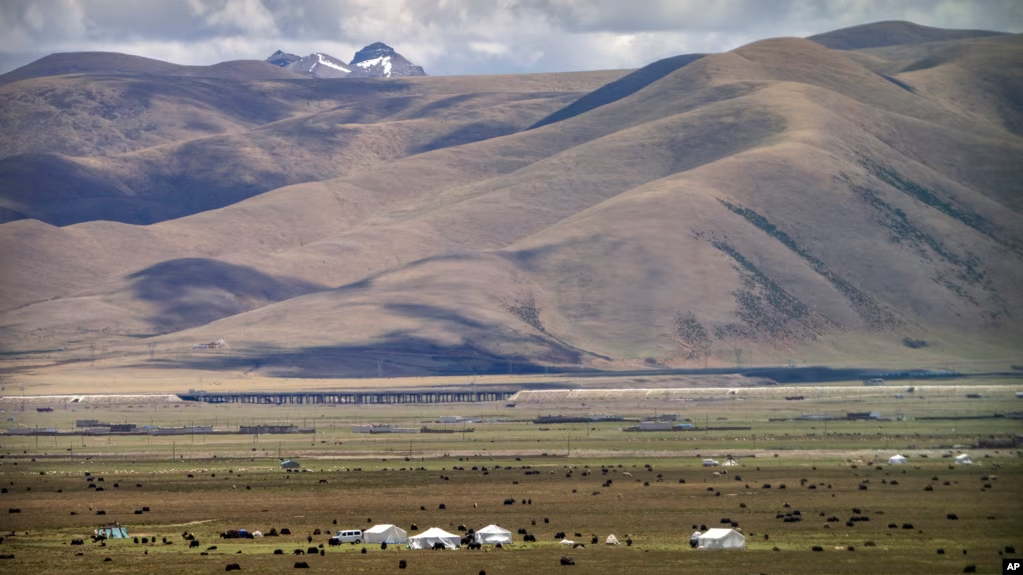
The report said more than 3 million of the 4.5 million rural Tibetans have been forced to build homes and give up their traditional nomadic lifestyle of agriculture and herding animals called yaks.
Tibetans now live in parts of the Sichuan, Yunnan and Qinghai provinces, which border the Tibetan Autonomous Region.
The rights group noted that the Chinese relocation policy “erodes or causes major damage to Tibetan culture and ways of life.” The Tibetans are forced to relocate to areas where they have no choice but to make money as laborers in “off-farm industries.”
China answers reports such as the one from Human Rights Watch by saying the accusations are intended to hurt China’s image. Last year, a spokesperson for the government said living conditions in Tibet were at their “historical best,” with a “booming economy.” The spokesperson said Tibetans had a full guarantee to practice their traditional religion and use their written and spoken languages.
China says its urbanization push has moved many of its 1.4 billion people out of poverty and provided formerly isolated communities with transportation, electricity, healthcare and education.
Even with the push, however, China’s economic growth has slowed in recent years partly because of an aging population and high youth unemployment.
Human Rights Watch suggests the United Nations carry out an independent investigation into what it calls human rights violations in Tibet and other areas.
Human Rights Watch released a report recently that provides evidence against official Chinese statements that many Tibetans have moved voluntarily.
The report said that, by the end of 2025, more than 930,000 rural Tibetans will have been moved to city areas. It said the Tibetans will not be able to get traditional jobs and will be limited in ways to make money.
When Tibetans who lived a traditional lifestyle far outside of cities left their homes, the homes were destroyed, the group said.
China claims Tibet has long been part of its territory. However, China’s Communist Party established control not long after it took over mainland China at the end of the civil war in 1949.
Since then, rights organizations say, China has used “coercive” methods to get minority groups to learn the official language of Mandarin Chinese and promise loyalty to the ruling party. The minorities include Xinjiang Uyghur, Mongolian, Tibetan and other ethnic groups.
Human Rights Watch said the programs are presented to local groups as “non-negotiable.” Local leaders are required to get “100 percent agreement from affected villagers to relocate,” the report said.
The report said that, when the rural Tibetans move to city areas such as Lhasa, they find a place mainly controlled by China’s Han ethnic majority. They also find that Han Chinese control city politics and the economy.
The report said more than 3 million of the 4.5 million rural Tibetans have been forced to build homes and give up their traditional nomadic lifestyle of agriculture and herding animals called yaks.
Tibetans now live in parts of the Sichuan, Yunnan and Qinghai provinces, which border the Tibetan Autonomous Region.
The rights group noted that the Chinese relocation policy “erodes or causes major damage to Tibetan culture and ways of life.” The Tibetans are forced to relocate to areas where they have no choice but to make money as laborers in “off-farm industries.”
China answers reports such as the one from Human Rights Watch by saying the accusations are intended to hurt China’s image. Last year, a spokesperson for the government said living conditions in Tibet were at their “historical best,” with a “booming economy.” The spokesperson said Tibetans had a full guarantee to practice their traditional religion and use their written and spoken languages.
China says its urbanization push has moved many of its 1.4 billion people out of poverty and provided formerly isolated communities with transportation, electricity, healthcare and education.
Even with the push, however, China’s economic growth has slowed in recent years partly because of an aging population and high youth unemployment.
Human Rights Watch suggests the United Nations carry out an independent investigation into what it calls human rights violations in Tibet and other areas.
Dan Friedell adapted this story for Learning English based on a report by The Associated Press.
Source:Rights Report: China Unfairly Pushing Rural Tibetans into Cities
VOA
本教材は、the U.S. Agency for Global Mediaより許諾を得て、産経ヒューマンラーニング株式会社が編集しています。
テキストの無断転載・無断使用を固く禁じます 。